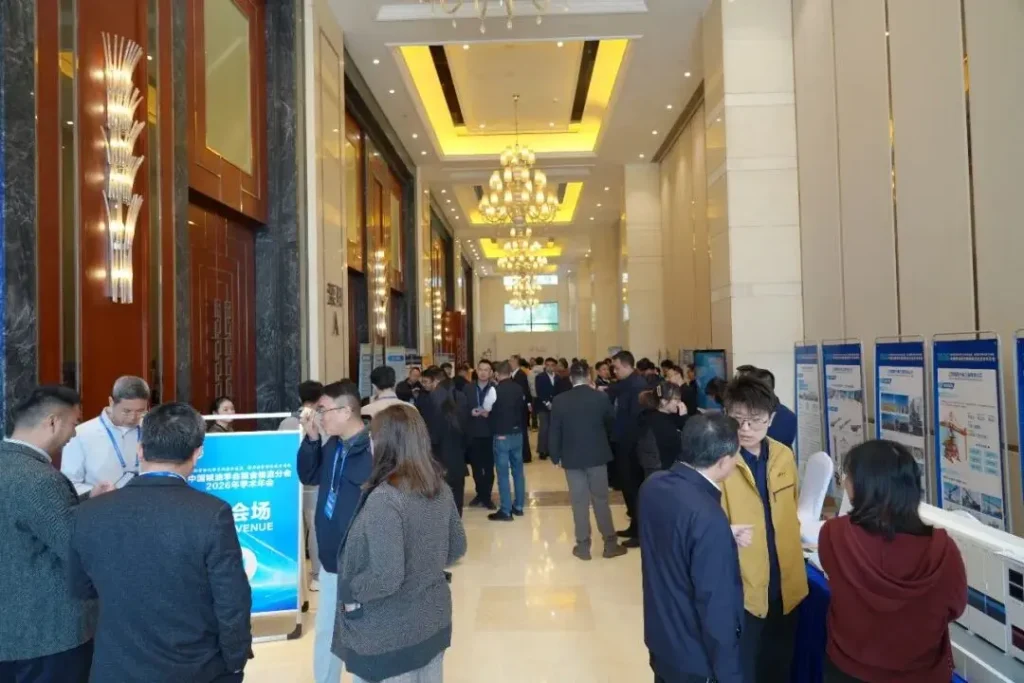

GSS Presents Induced-Flow Chute Technology at the 2026 CCOA Grain Logistics Academic Annual Conference
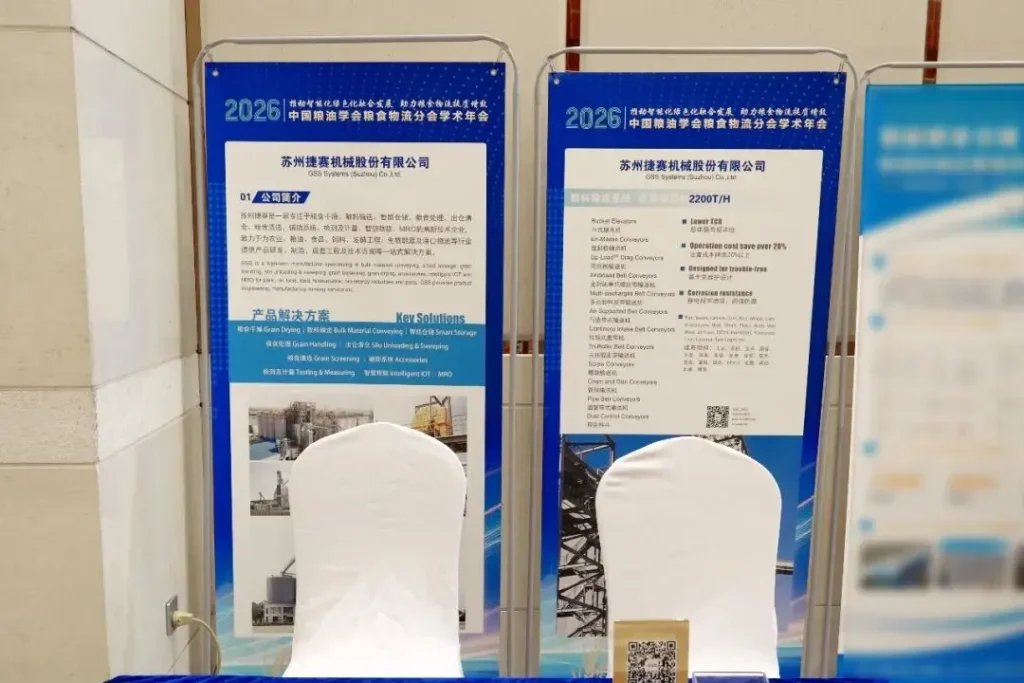
From November 23 to 25, 2026, the 2026 Academic Annual Conference of the Grain Logistics Branch of the Chinese Cereals and Oils Association (CCOA) was held in Liyang, Jiangsu Province, by the shore of Tianmu Lake. GSS Systems was invited to attend and delivered a technical presentation during the enterprise technology-sharing session, exchanging solutions for green and efficient bulk grain transfer with industry peers.
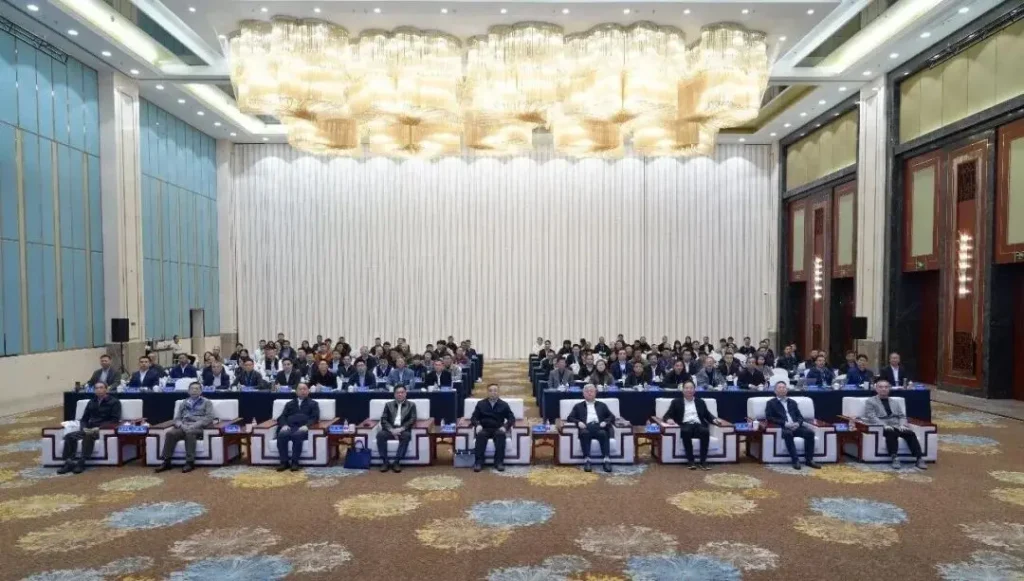
A Platform for Smarter, Greener Grain Logistics
Themed “Promoting the Integrated Development of Intelligence and Green Technology to Improve Grain Logistics Quality and Efficiency,” this year’s conference brought together leading experts, scholars, and representatives of top enterprises across the grain and oil sector. Discussions centered on new-quality productive forces, grain loss reduction, innovation in bulk grain logistics equipment, and the development of intelligent warehousing and logistics — charting the course for high-quality development of modern grain circulation.
GSS Keynote: Induced-Flow Chute Technology
Speaking at the conference, Mr. Tian Yingbin, Vice President and Chief Technology Officer of GSS Systems, delivered a presentation on induced-flow chute technology for high-throughput, low-dust, and low-breakage transfer stations. Drawing on first-hand engineering practice, he systematically introduced the design philosophy, application results, and innovation value of the induced-flow chute from three dimensions: technical mechanism, pain-point treatment, and field performance.
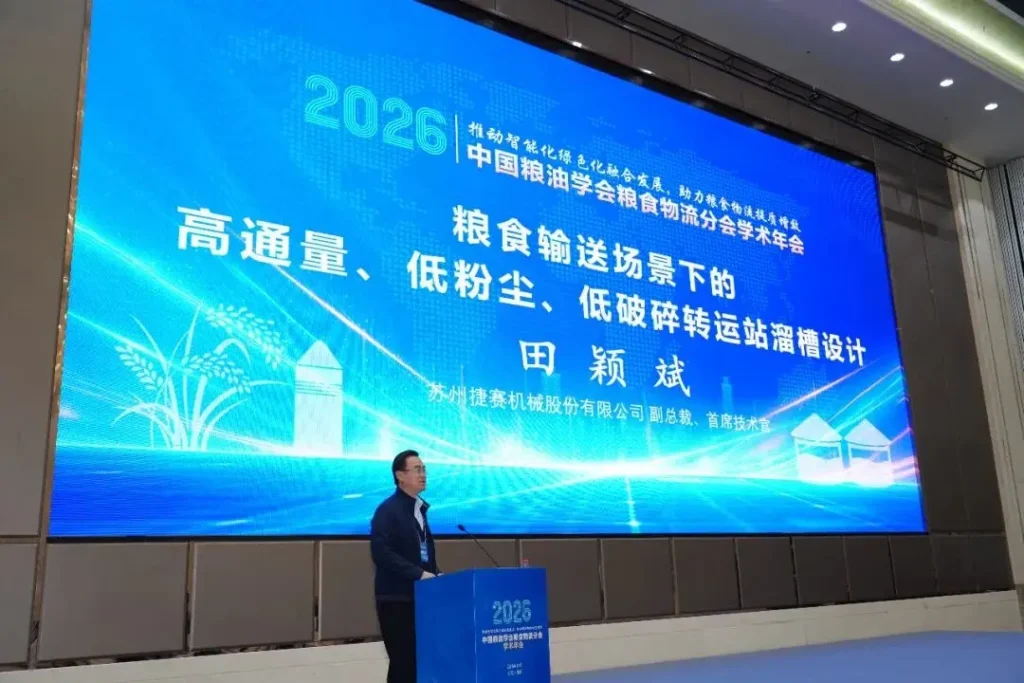
Bulk grain transfer is a fundamental link in grain circulation. Conventional transfer chutes commonly suffer from high material impact, elevated grain breakage, strong induced air currents, prominent dust emissions, off-center loading and spillage, and frequent blockages and wear — all of which constrain the operating efficiency and safety of transfer systems at silos, ports, and grain processing plants.
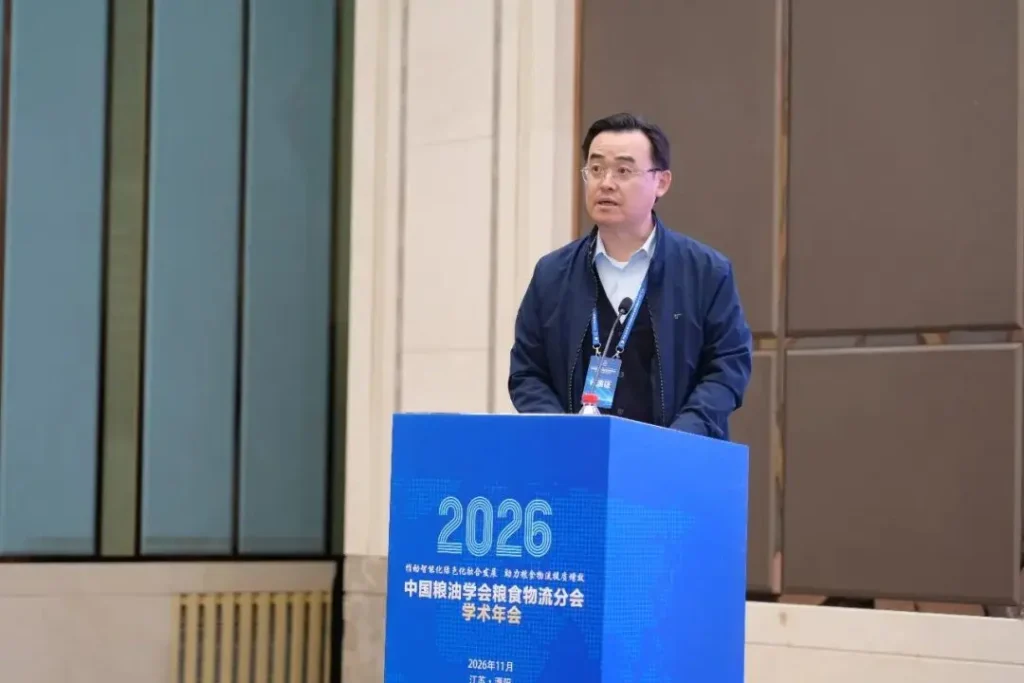
The induced-flow chute developed by GSS Systems relies on computational fluid dynamics (CFD) simulation and has been continuously refined through extensive project experience. Its streamlined curved profile guides the trajectory of the grain stream, effectively manages and suppresses the induced air generated during transfer, aligns the material flow direction, and reduces the impact energy of falling grain.
Safer, Higher Quality, Lower Carbon
Safer operation. A controlled flow-channel design greatly reduces induced air volume and air entrainment. Under identical operating conditions, dust escape concentration can be reduced by 20%–40%, lowering dust-related risks at the source.
Better grain quality. The material flow transitions smoothly onto the receiving belt for a controlled “soft landing,” reducing additional breakage during transfer by 20%–35% and protecting the appearance and commercial value of the grain.
Cleaner and lower carbon. The fully enclosed, dead-corner-free flow channel reduces the risk of residual grain and mold, cuts energy consumption of the matched dust collection system by approximately 15%–25%, and lowers annual maintenance costs by 20%–30%.
Closing
From field to table, grain passes through countless loading, unloading, and transfer operations — and the more fundamental the link, the more it determines quality and safety along the entire chain. GSS Systems remains committed to technology-driven innovation across the full chain of grain receiving, conveying, storage, drying, and discharge. Beyond optimizing individual machines, the company provides complete integrated system solutions for ports, large grain depots, and grain and feed processing projects, feeding engineering experience back into industry progress.
During the conference, GSS Systems exchanged ideas with experts and enterprise representatives from across the country, gaining a vivid sense of the momentum behind smarter, greener grain logistics in China. The company’s technical presentation drew close attention and recognition from attendees.
Progress in modern grain logistics depends on the coordinated effort of the entire industry chain. Innovation is never a solo journey — only through open exchange and shared purpose can the industry keep injecting fresh momentum and jointly strengthen the foundation of food security.