

What is an Air Supported Belt Conveyor and How to Commission a Newly Installed One?
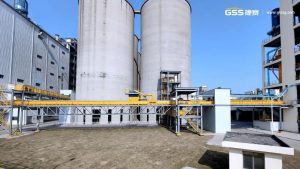
1. What is an Air Supported Belt Conveyor?
1.1 How It Works?
An Air Supported Belt Conveyor is an advanced continuous conveying equipment that uses high-pressure airflow to create an air cushion layer between the conveyor belt and the load-bearing surface, allowing the belt to operate in a suspended state. Its core principle relies on a blower that supplies air to a sealed plenum chamber. The airflow exits through nozzles at the bottom of the chamber, forming a uniform air film beneath the belt, which dramatically reduces frictional resistance and achieves efficient, energy-saving material transport.
1.2 What It Can Carry?
Powders, granules and small lumps with a bulk density of 400–2500 kg/m³ are all within range, with established applications in power generation, chemicals, building materials, metallurgy, grain handling, ports, coal and machinery.
1.3 What are the Advantages of Air Supported Belt Conveyor?
- Low Energy Consumption: Replaces traditional roller rolling friction with air fluid friction, reducing motion resistance to 1/3 – 1/5 of roller conveyors and saving over 40% in electricity.
- High Efficiency: Belt speed can be increased to 3.5-5m/s (compared to 2-3 m/s for conventional roller types), boosting conveying capacity by over 30%.
- Low Maintenance Costs: Eliminates vulnerable parts like rollers and bearings, reducing moving parts by over 80% and eliminating routine lubrication and replacement work.
- Eco-Friendly & Quiet: Features a fully enclosed design combined with a dust collection system to suppress dust leaks. The absence of rollers reduces noise levels by more than 15dB compared to roller conveyors.

2. How to Commission a Newly Installed Air Supported Belt Conveyor?
2.1 Checks Before Test Run
A no-load test of at least two hours must be conducted after installation of air supported belt conveyor. Preparation steps include:
- Installation accuracy
Installation should follow the mechanical requirements. Parallelism between the two flange faces of the air chamber, and perpendicularity of the chamber flange face to the trough centreline, should be within tolerance grade.
- Trough surface condition
The trough surface should be regular and smooth, free of local high spots, depressions and visible creases, and the air holes must be free of burrs. A burr scores the underside of the belt, and that kind of damage usually only surfaces after a few hundred hours of running, when rework is expensive.
- Straightness and joint direction
Straightness of the trough centreline is 1/1000 of trough length, and the machine centreline must stay within 5 mm over any 25 m. The step between trough plates at adjacent chamber joints is directional: no more than 1.0 mm in the direction of belt travel, and no more than 0.2 mm against it. The reverse tolerance is tighter because the belt scrapes over a backward step, and a slightly larger one will wear its edge.
- Lubrication, fasteners and housekeeping
Bearings and drive components need adequate oil or grease. Re-torque every connecting bolt, with pulley taper bushes and bearing bolts tightened a second time, and check site welds for missed runs. No tools, material or welding stubs may be left inside the machine — a single spanner is enough to cut through a belt.
- Electrical checks and rotation direction
Confirm that controls, protection and insulation are sound. Jog the motor to verify rotation: on a drive with a fluid coupling, leave the coupling unfilled for the jog; without one, disconnect the high-speed coupling first.
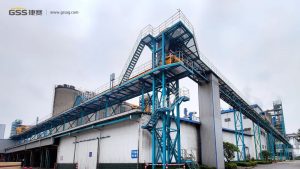
2.2 How to Conduct No-Load Test Run?
The no-load test run must last at least 2 hours with a minimum of three people — one at the head, one at the tail, one at the control panel.
2.2.1 Make Sure the Start-up and Shutdown Sequence is Right
Always start the fan first, wait until a stable air film has formed under the belt, then start the drive motor. When stopping, shut down the drive motor first and turn off the blower only after the belt stops completely.
In practice the sequence is locked in with time delays: the drive starts 30–60s after the fan, and the fan stops 1–2 min after the drive.
2.2.2 Seven Things to Watch Under No Load
- Any binding in rotating parts, especially where something rubs the belt — deal with it as soon as it appears.
- Belt deviation: ensure belt deviation does not exceed 10% of the width.
- Abnormal noise and vibration, with the fan’s vibration and noise checked separately.
- Oil leaks at the reducer, fluid coupling and other lubricated points.
- Oil and bearing temperatures within normal range.
- Brakes, limit switches and protection devices responding reliably.
- Cleaner blade contact with the belt, take-up free of jamming, anchor bolts tight.
2.3 Load Test Run
Loading Steps: Gradually increase load to 60%, 80%, and 100% of rated capacity, running continuously for at least 2 hours at each stage (conduct 110% -125% overload tests if required).
Parameters to Measure During Load Test Run
Measure belt speed, air pressure, air volume, differential pressure, air film thickness, throughput and start/stop times on site against the design figures, and record motor current at steady full-load running.
Components to Watch During Load Test Run
Listen for abnormal noise in the drive, and check temperatures at the motor, reducer bearings, lubricating oil and fluid coupling. Check drums and idlers for noise and bearing temperature, adjusting or replacing any idler that has stopped turning. Check cleaner performance and vibration. Check the belt for scores and trace the cause immediately if one appears.
Four Problems That Come Up Most Often During Load Test Run
- The air film is too thin
The belt rides on the trough, resistance climbs and motor current runs high. Check that the air supply is working properly and adjust the upper and lower chamber dampers until film thickness is even and adequate.
- Belt slip at start-up
Slip between drive pulley and belt, usually on a loaded start. Increase take-up tension progressively until slip stops — but do not keep adding tension, since an over-tight belt fatigues its splice faster.
- Belt deviation
Correct anything beyond 10% of belt width. Work in this order:
- check whether the material is centred on the belt, since an off-centre load point is the most common cause;
- then check whether tension is low, since a modest increase helps;
- if neither applies, check the straightness of the belt and splice centrelines and re-splice if necessary.
- Off-centre loading
Material sitting off centre and piled to one side pushes the belt that way. Correcting misalignment here treats the symptom; modify the chute structure or position so material lands on the belt centre.
An air supported belt conveyor is low-maintenance by design, and the price of that is a higher accuracy requirement at first commissioning. Two extra days spent on the trough saves two years of idler changes.
The next article covers day-to-day operation, maintenance and inspection points.